
Your Setup Is the Problem
By mid-morning, you’ve already competed with a neighbor’s voice bleeding through the wall, and the couch that’s been in your peripheral vision since you sat down.
This isn’t a discipline issue. It’s a workspace problem and one of the most underaddressed frustrations in remote work today. Homes are built for living, not for eight hours of concentrated professional output. Yet most remote workers treat a spare corner and a laptop as a functional office. That gap has a real cost.
The Environment Shapes the Work
When focus breaks during the day, the instinct is to blame routine, mindset, or motivation. Usually, the real culprit is the room itself. A workspace that isn’t acoustically or physically separated from the rest of the home is a compromise, not an office. The brain constantly registers competing signal household sounds, movement, visible chores and deep, sustained concentration becomes a daily fight rather than a baseline state. Posture tells the same story. Dining chairs, sofas, and makeshift setups place cumulative stress on the lower back, neck, and shoulders. It rarely announces itself as acute pain. It accumulates and over months, it starts disrupting sleep, compressing energy, and shortening productive hours.
What Your Home Office Needs
Three things are non-negotiable: physical separation from domestic life, ergonomic furniture that supports the body across a full workday, and an environment that cues the brain to shift into work mode. Separation doesn’t require a dedicated room. It requires a boundary acoustic, visual, or both somewhere that sitting down triggers a clear change in mental state. That distinction is what turns a corner into a workspace.
On the ergonomics side: a chair calibrated for spinal alignment and a desk that accommodates both seated and standing positions. For anyone logging more than five hours a day, a sit-stand desk isn’t a luxury. It’s a physiological baseline circulation, musculoskeletal (human movement system) health, and sustained energy all depend on it.
Here’s What Actually Changes
Work hours feel shorter not because less is happening, but because cognitive bandwidth isn’t split between professional tasks and domestic noise. The line between work and home becomes architectural, not just psychological. For anyone working from home full-time, that’s the difference between a setup that sustains performance and one that quietly wears you down.
Meet the Ergostar Solution
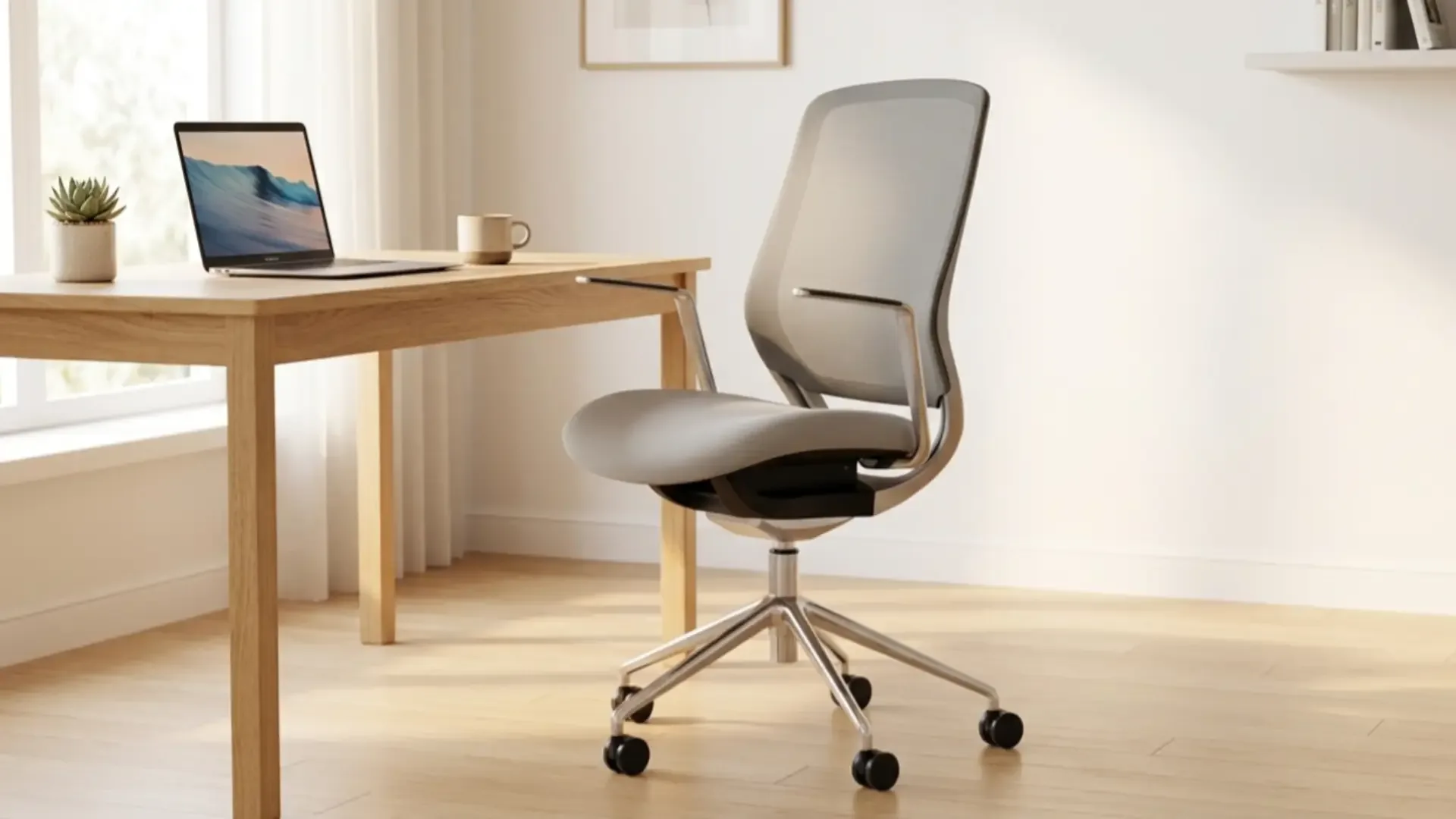
The Ergostar NORRISE tackles the ergonomics problem directly. Built with a tilt aluminum mechanism for dynamic movement throughout the day, a Class 3 gaslift for precise height calibration, and an aluminum base engineered for long-term durability, it removes the cumulative physical cost that most home setups quietly impose. Paired with a purpose-built desk and a clearly defined workspace, the NORRISE turns a domestic corner into a setup that holds up not just for the first few hours, but across a full workday. That’s the foundation of a home office that actually performs. Explore the full Ergostar range at Ergostar and build the workspace your work deserves.