
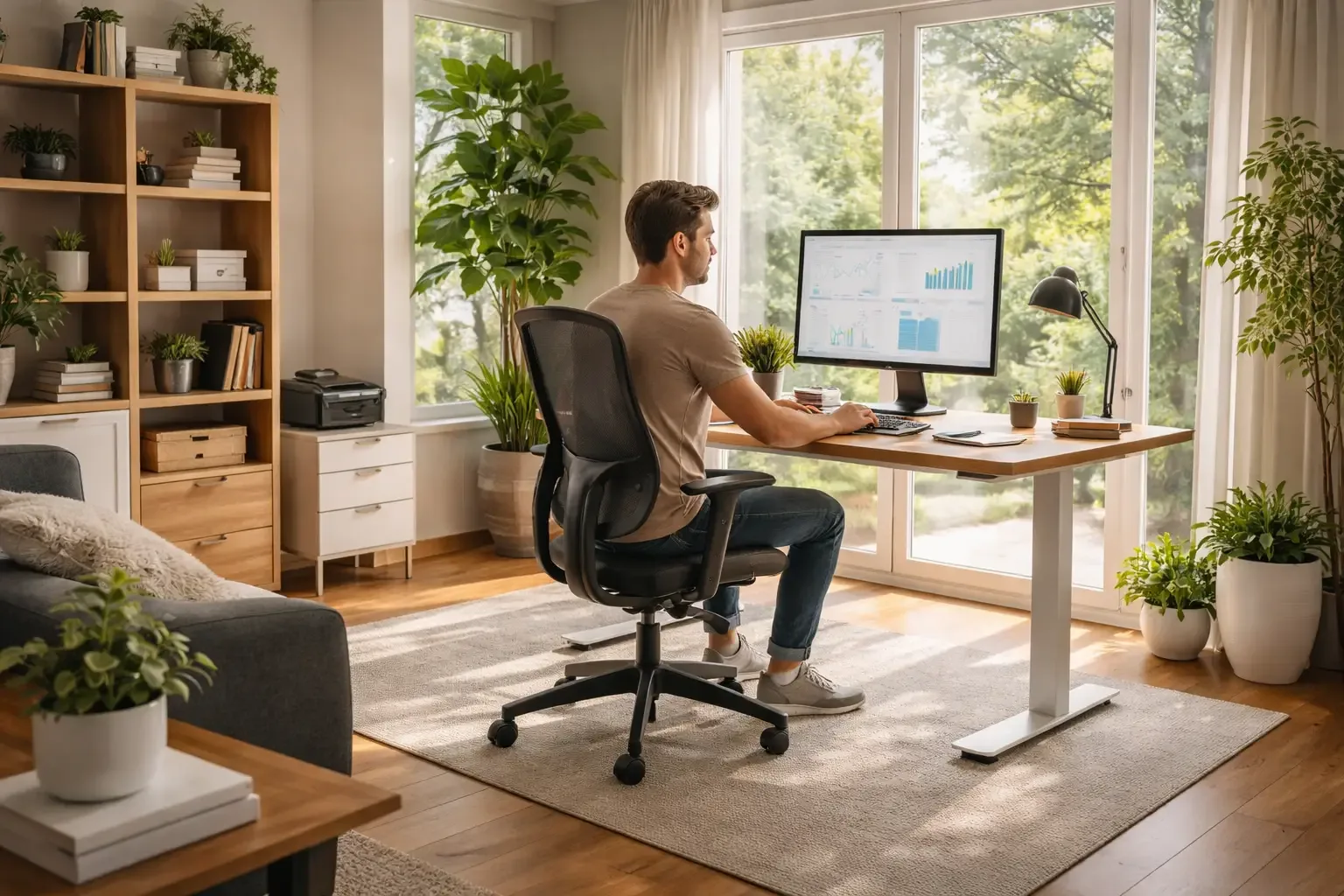
Work habits continue to shift as more people spend time working, studying, or managing tasks from home. Two common approaches shape how people design their personal spaces. Business to Business and Business to Consumer. Business to Business focuses on company operations. Business to Consumer focuses on individual needs and daily routines.
In a home setting, priorities differ from corporate environments. You focus on comfort, flexibility, and visual appeal. You also need furniture that supports multiple activities, from work to rest.
Because of these needs, more people choose ergonomic furniture when setting up their spaces. Ergonomic furniture supports posture, improves comfort, and helps you stay productive during daily activities.
Why Ergonomic Furniture Matters in Daily Use
You often spend six to eight hours sitting, whether for work, study, or screen time. Standard furniture does not support long use. This leads to back pain, neck strain, and reduced focus.
Ergonomic furniture solves this issue by supporting natural body posture. Chairs with lumbar support, adjustable desks, and flexible seating reduce pressure on your spine and shoulders. Research in workplace health shows better posture leads to improved focus and fewer breaks caused by discomfort.
This is why ergonomic furniture becomes part of daily living, not only for work but also for long term health and comfort.
Designing Personal Spaces with Ergonomic Furniture
Setting up your space starts with understanding your daily habits. You need to consider how long you sit, what devices you use, and how often you switch activities.
If you often multitask, modular ergonomic furniture helps you adjust your setup quickly. Adjustable desks and flexible chairs allow you to change positions based on your needs.
For focused tasks, ergonomic furniture helps you maintain proper posture for longer periods. You can adjust height, seating angle, and screen position to match your body.
This approach creates a space that stays comfortable and functional, even as your routine changes.
Ergonomic Furniture as a Smart Personal Investment
People investing in their homes now look for furniture that combines comfort, durability, and flexibility. Brands such as Ergostar develop ergonomic furniture designed for home offices, study areas, and hybrid living spaces. Their products include ergonomic desks, chairs, and modular setups that support daily productivity and comfort.
With experience in workspace design, Ergostar focuses on creating ergonomic furniture that fits modern lifestyles and long term use.If you plan to upgrade your home workspace or improve daily comfort, explore how Ergostar ergonomic furniture supports a more efficient and comfortable setup.