
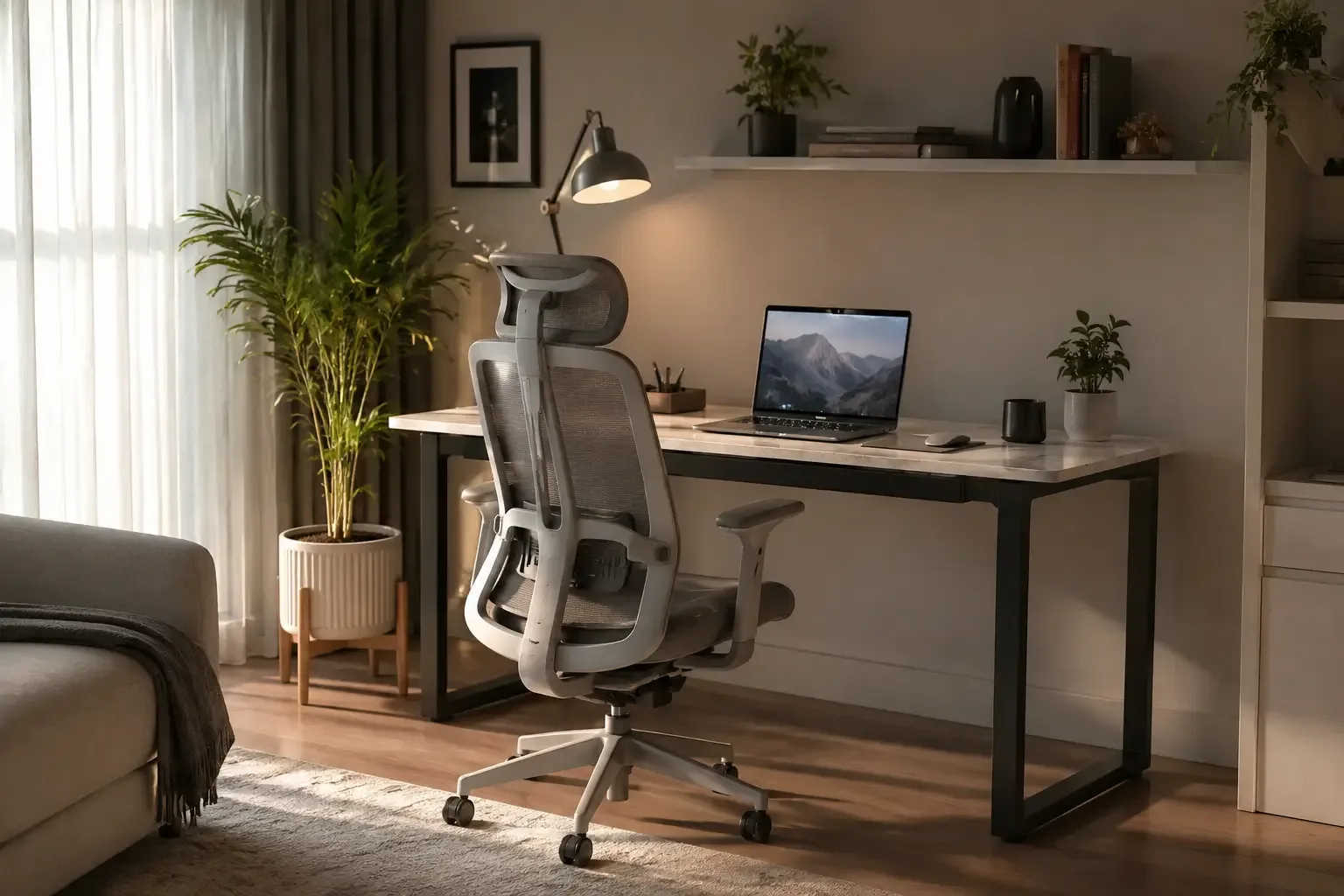
Most advice about home offices treats aesthetics as the last thing to worry about. The chair has to be ergonomic, the desk has to be the right height, the lighting has to be correct, and somewhere far down the list, the workspace should also look reasonably nice. The order makes sense on paper. It rarely matches how people actually behave.
A workspace that looks unappealing tends to be a workspace people avoid, regardless of how technically correct everything in it is.
A Workspace You Skip
That avoidance is where the real damage starts. A home office is the only office that has to compete with the rest of the home for the worker’s attention, and when the corner with the proper chair and the proper desk also happens to look like a tired storage area, the laptop migrates somewhere else. The sofa. The bed. The kitchen counter. None of these places are good for working, but they win because the alternative does not invite anyone to sit there.
Avoidance is the quiet failure mode of the home office. The setup exists on paper, but the actual hours of work happen everywhere except the place that was supposed to host them. The cost is not visible in a single day. It compounds across months of working from the wrong surfaces and the wrong postures.
A Room Sends Signals to the Body
The reason this happens is not laziness. People underestimate how much the visual quality of a workspace affects the will to use it. A corner that feels intentional invites the workday to begin there, while a corner that feels improvised sends the opposite signal. The brain registers the difference before the conscious mind has formed an opinion about it.
There is research behind this pattern. A study from the Princeton University Neuroscience Institute found that multiple visual stimuli in cluttered scenes compete for the brain’s attention, which reduces the ability to focus on the task at hand. A workspace that looks chaotic forces the brain to work harder just to maintain concentration. A workspace that looks composed gives the brain one less thing to filter out. (Is this part necessary or not, kak?)
What a Workspace Should Quietly Communicate
If the eye decides whether the body will sit down, the next question is what the eye is looking for. A good home office sends a few specific signals. Material that suggests permanence rather than temporary fix. Pieces that match each other in proportion and finish, rather than a collection of whatever was available at the time. Surfaces that look clean, intentional, and self-contained, instead of an extension of the surrounding clutter.
These signals are not about luxury or visual flourish. They are about reducing the visual noise that quietly drains the will to sit down and start. A workspace that looks settled is easier to settle into.
Furniture That Looks the Part
Ergostar offers a wide collection built around exactly this idea. The pieces range from brighter sofas that bring warmth into a quiet corner to muted chairs and tables that calm a busier room. Every piece is built for the same two things: comfort through long working hours, and a design that belongs in the home. If the home office still feels like a temporary fix that nobody actually wants to sit at, the Ergostar catalog is worth a closer look.